
A Battle for the Soul of Blockchain & Who Will Control It?

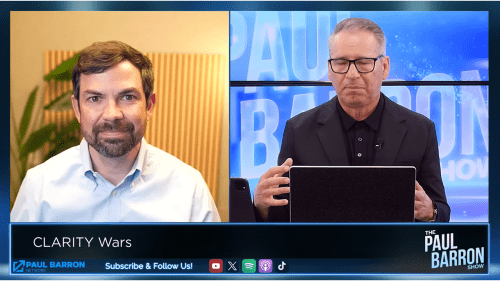
Watch the Video
Blockchain is no longer being dismissed by the financial establishment. That debate is over. The real question now is: who will control it?
A recent discussion involving the Depository Trust & Clearing Corporation (DTCC) highlights this tension. The DTCC is a critical financial market infrastructure organization that helps process, clear, settle, and record securities transactions after trades occur. Their position mattes because it currently sits at the center of traditional financial settlement and is now positioning itself to play a similar central role in tokenized and digital asset markets.
The DTCC is not rejecting blockchain or tokenization. It is preparing for them. But its vision appears centered on established financial institutions, regulated intermediaries, and DTCC itself serving as a central connector, common ledger, and “center of gravity” for digital asset adoption. The DTCC is presented as moving aggressively into tokenization while warning against fragmentation in markets and liquidity.
One vision of blockchain treats it as an efficiency upgrade for the existing financial system: faster settlement, improved infrastructure, and better coordination among trusted institutions. Another vision sees blockchain as a new architecture for peer-to-peer markets, digital ownership, decentralized finance, and user-controlled assets.
Both perspectives raise valid points. Markets need trust, security, accountability, and resilience. Fragmented liquidity and weak controls can create real risks. But there is also a danger that “protecting the system” becomes a way to preserve gatekeepers and limit innovation.
DTCC argues that non-custodial wallet providers, DeFi interfaces, automated market makers, and similar actors should register when they perform functions like regulated intermediaries. That raises a defining question: when does responsible oversight become an attempt to classify decentralized software as a traditional intermediary?
This is a Battle for the Soul of Blockchain
Will blockchain become a tool for institutional efficiency, or a foundation for digital trust? Will it reinforce the old gatekeepers, or expand access to new markets and opportunities? Will it preserve centralized control, or enable responsible decentralization?
The answer should not be a false choice. The future can include regulated institutions, public blockchains, permissioned systems, tokenized assets, decentralized finance, and peer-to-peer transactions. But that future must be shaped by standards like the Blockchain Maturity Model (BMM), assurance, transparency, interoperability, and public benefit, not fear, hype, or institutional self-interest.
This is exactly the kind of debate that must be addressed by policymakers, regulators, innovators, financial institutions, and public-sector leaders.
Call to Action
To join the conversation, participate the Future of Money, Governance, and the Law, where leaders from government, finance, technology, and law will examine how digital assets, blockchain, AI, and emerging technologies are reshaping the future of markets and governance. For more information about this event, email events@GBAglobal.org.




Responses