
Blockchain Maturity Model Series Document
The report presents a comprehensive analysis of how blockchain technology, often combined with artificial intelligence, can strengthen transparency, accountability, and efficiency in government financial systems. The report highlights systemic challenges in public-sector financial management, including fragmented legacy systems, limited real-time oversight, reactive auditing practices, and vulnerabilities to fraud that may cost governments hundreds of billions annually.
Through detailed global use cases from U.S. Department of Defense logistics and Department of Energy grant oversight to UN humanitarian aid distribution, digital pension verification, land registries, and motor vehicle title management, the report demonstrates how blockchain’s immutable, time-stamped, and auditable ledgers can provide end-to-end traceability, automate compliance through smart contracts, and shift oversight from retrospective detection to proactive prevention. While technical feasibility has been proven in multiple pilots, the report emphasizes that cultural resistance to transparency and institutional inertia remain significant barriers, concluding that blockchain adoption can play a pivotal role in achieving stronger institutions aligned with UN Sustainable Development Goal 16.6.
Modernizing Systems with Blockchain to Reduce Fraud, Waste and Abuse in Government
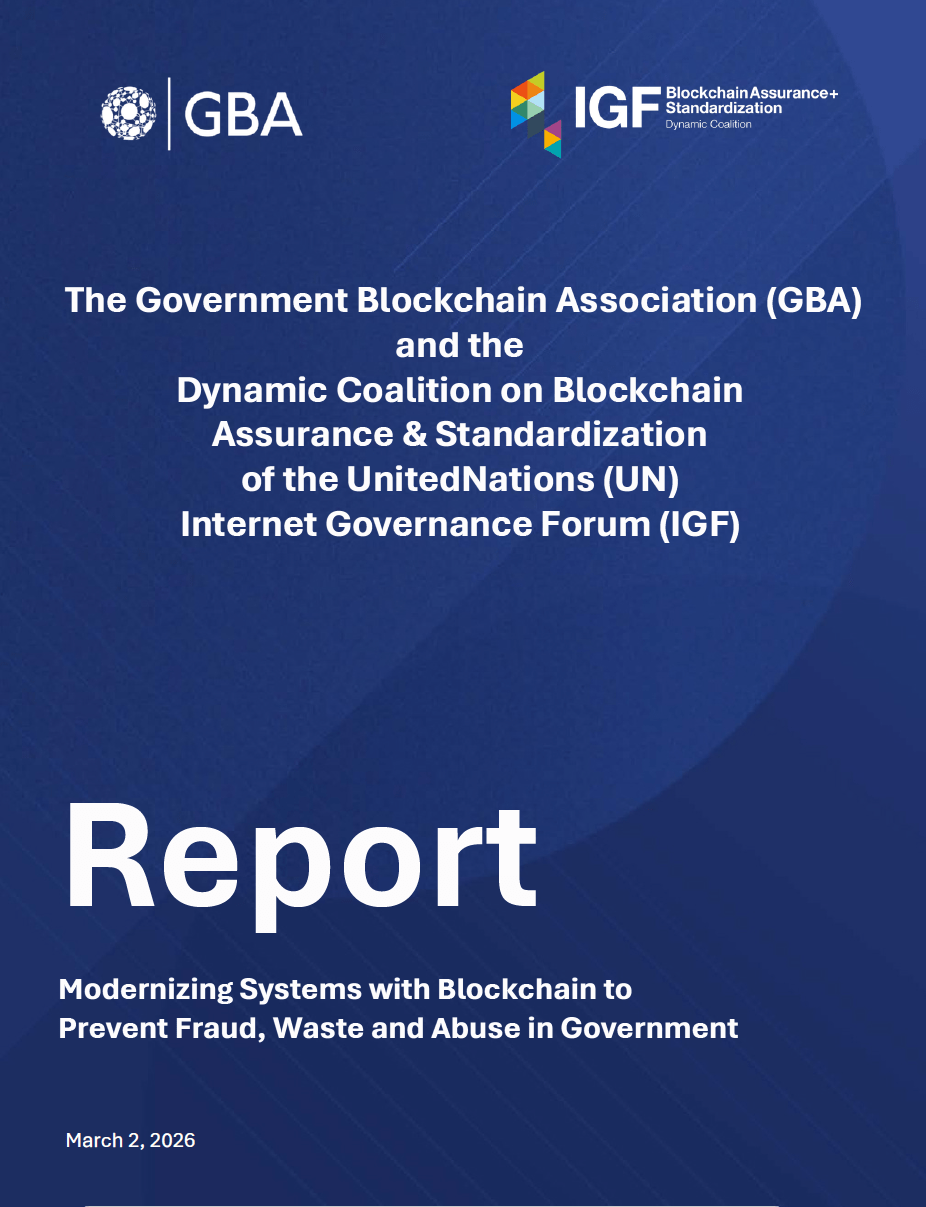
Modernizing Systems with Blockchain to Reduce Fraud, Waste and Abuse in Government presents a comprehensive analysis of how blockchain technology, often combined with artificial intelligence, can strengthen transparency, accountability, and efficiency in government financial systems. The report highlights systemic challenges in public-sector financial management, including fragmented legacy systems, limited real-time oversight, reactive auditing practices, and vulnerabilities to fraud that may cost governments hundreds of billions annually.
Through detailed global use cases from U.S. Department of Defense logistics and Department of Energy grant oversight to UN humanitarian aid distribution, digital pension verification, land registries, and motor vehicle title management, the report demonstrates how blockchain’s immutable, time-stamped, and auditable ledgers can provide end-to-end traceability, automate compliance through smart contracts, and shift oversight from retrospective detection to proactive prevention. While technical feasibility has been proven in multiple pilots, the report emphasizes that cultural resistance to transparency and institutional inertia remain significant barriers, concluding that blockchain adoption can play a pivotal role in achieving stronger institutions aligned with UN Sustainable Development Goal 16.6.
50-State Blockchain Legislation
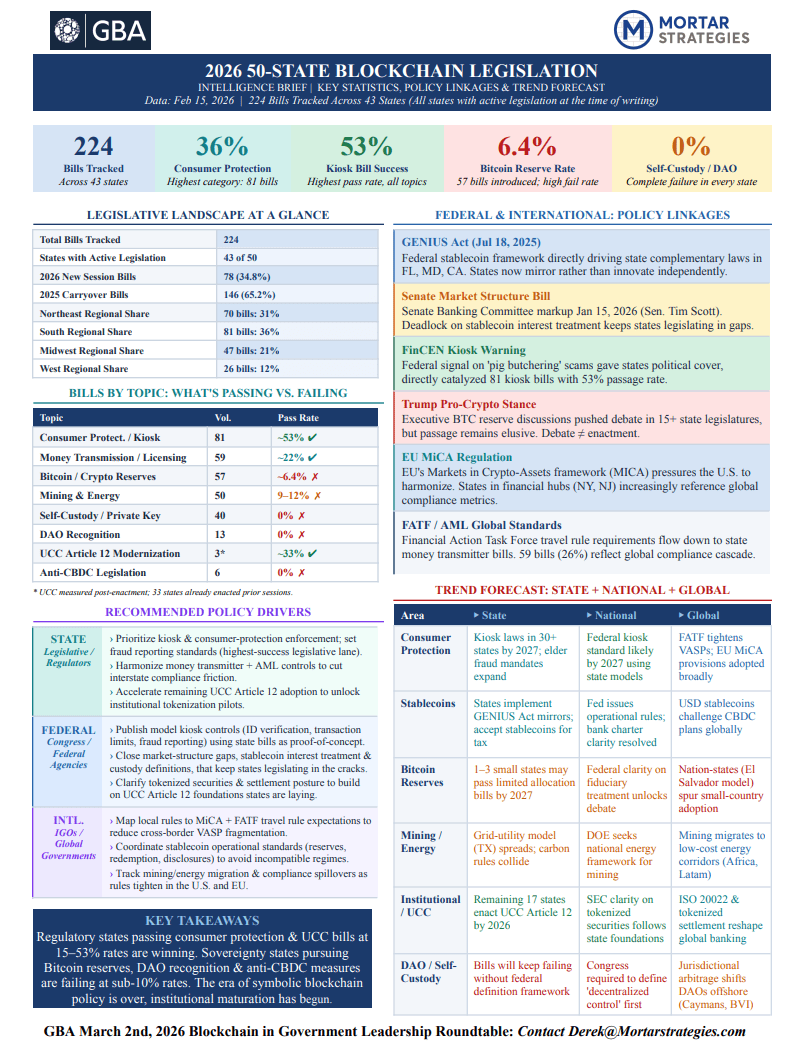
The “50-State Blockchain Legislation” one-pager from the Government Blockchain Association provides a concise overview of how blockchain and digital asset legislation is evolving across the United States. It highlights key policy trends, legislative activity, and regulatory approaches being taken by individual states, illustrating the growing role of state governments in shaping the legal environment for blockchain technology, digital assets, and related innovations. The document summarizes the types of laws being introduced or enacted—such as those addressing digital asset classification, blockchain business regulation, financial services, and technology adoption—while emphasizing the uneven and rapidly developing regulatory landscape across all 50 states. Overall, the one-pager serves as a quick reference for policymakers, industry leaders, and stakeholders seeking to understand the scope and direction of blockchain-related legislation at the state level in the U.S.
GBA’s Voting Working Group’s mission is to explore and harness the potential of blockchain technology in voting, ensuring the elections that are secure, transparent, accessible, and auditable. From white papers to dynamic presentations, our work is at the forefront of elections innovation.